

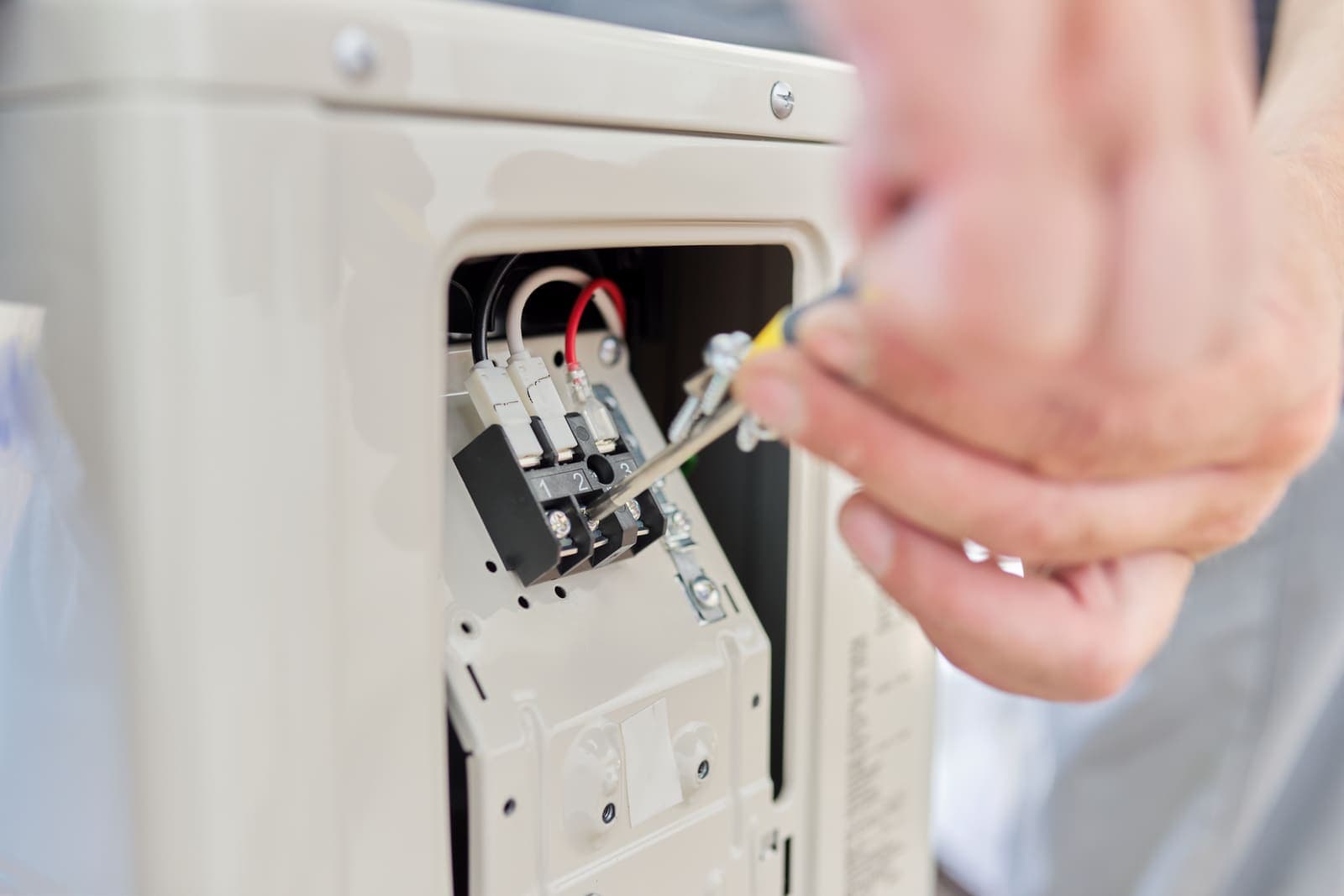
If we had to name the single most common air conditioning repair we make between June and September, it would be this one. The capacitor is a small, inexpensive part, it fails constantly in Carolina heat, and it takes down the whole system when it goes. The good news: it's also one of the cheapest real repairs in HVAC.
What it does. A capacitor stores an electrical charge and releases it to give the compressor and fan motors the extra jolt they need to start, then helps keep them running smoothly. Most residential systems use a dual run capacitor in the outdoor unit that serves both the compressor and the condenser fan. Without it, the motors hum and strain but can't spin up.
Why it fails so often here. Capacitors are rated for a temperature range, and prolonged heat degrades them. An outdoor unit sitting in full sun through a 95-degree Charlotte afternoon runs hot inside, and every summer that heat cooks the capacitor a little more. Power surges — common with our thunderstorms — and a system that's already struggling with a dirty coil finish the job. Most capacitors last 5 to 10 years; in our climate, closer to the low end.
The symptoms. A humming outdoor unit with a fan that isn't spinning (sometimes you can start it with a stick — don't, but it's a telltale sign), an AC that takes several tries to start, a system that starts and shuts off quickly, a clicking sound from the unit, or warm air from the vents with the outdoor unit not running. A bulged or leaking capacitor top is a visual giveaway.
The cost. The part itself is usually $15–$60. Installed, expect roughly $150–$400 depending on the type, brand, and whether it's a service call during peak season or after hours. Some higher-end systems use more specialized capacitors that push the price up somewhat. Anyone quoting many hundreds of dollars for a standard capacitor swap deserves a second opinion.
One caution and one bonus. The caution: capacitors hold a charge even with the power off and can deliver a serious shock; this is not a good DIY repair unless you know how to discharge one safely. The bonus: a technician replacing a capacitor should also check the contactor, amperage draw, and refrigerant pressures — because a capacitor that failed early is sometimes a symptom of a compressor or motor that's drawing too much current, and catching that early is the difference between a $200 repair and a $2,000 one.
Reinhardt Heating and Air stocks capacitors for all major brands on every truck and fixes this same-visit across Lincoln, Gaston, Mecklenburg, and Catawba counties. If your AC is humming but not cooling, call us 7am to midnight — this is usually a fast, inexpensive fix.