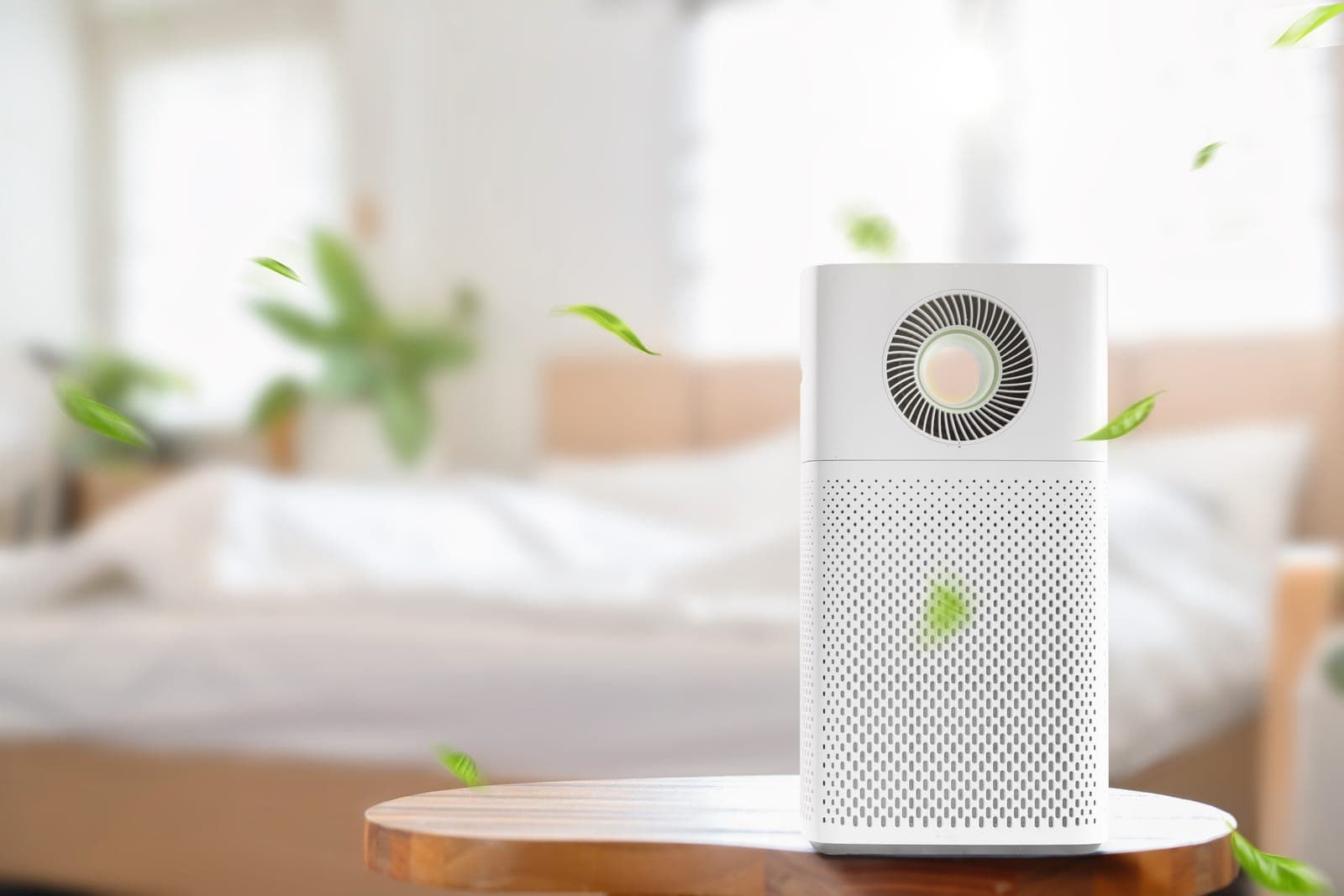
If you've researched indoor air quality, you've probably run into the term "air scrubber" — and a lot of confusing marketing along with it. Let's cut through it. An air scrubber is an active air-purification device installed directly in your HVAC ductwork, and unlike a filter, it doesn't wait for contaminants to come to it.
How it differs from a filter: your air filter is passive. Air has to physically pass through it, and it only captures particles large enough to get trapped in the media. An air scrubber is active — it sends purifying agents (typically UV light combined with a catalytic process that produces ionized particles) out into your living space, where they neutralize contaminants on surfaces and in the air throughout the house, not just inside the return duct.
What it targets: odors (cooking, pets, smoke), mold and mildew spores, bacteria and viruses, and VOCs off-gassing from paint, new carpet, and cleaning products. That's a meaningfully different list than a filter's — filters are great at dust and pollen, but they do nothing about odors or surface contamination.
Who benefits most in our area: households with allergy or asthma sufferers, homes with pets, anyone dealing with lingering musty smells (very common with our humidity and crawlspace construction), families with someone immunocompromised, homes after water damage or renovation, and older houses where odors have settled into materials.
The honest caveats: an air scrubber isn't a replacement for good filtration, adequate ventilation, or humidity control — it's a layer on top of them. Be skeptical of any company promising it will "cure" allergies or eliminate all germs; the realistic benefit is noticeably fresher air and reduced odors and microbial growth. Also, quality varies a lot between brands, and some older ionizing technologies produce ozone, which you don't want. Ask what technology is in the unit.
Reinhardt Heating and Air installs air scrubbers, UV lights, whole-home dehumidifiers, and upgraded filtration across Lincoln, Gaston, Mecklenburg, and Catawba counties. We'll assess your actual air quality problem first and recommend what genuinely fixes it — not just what's most expensive.