

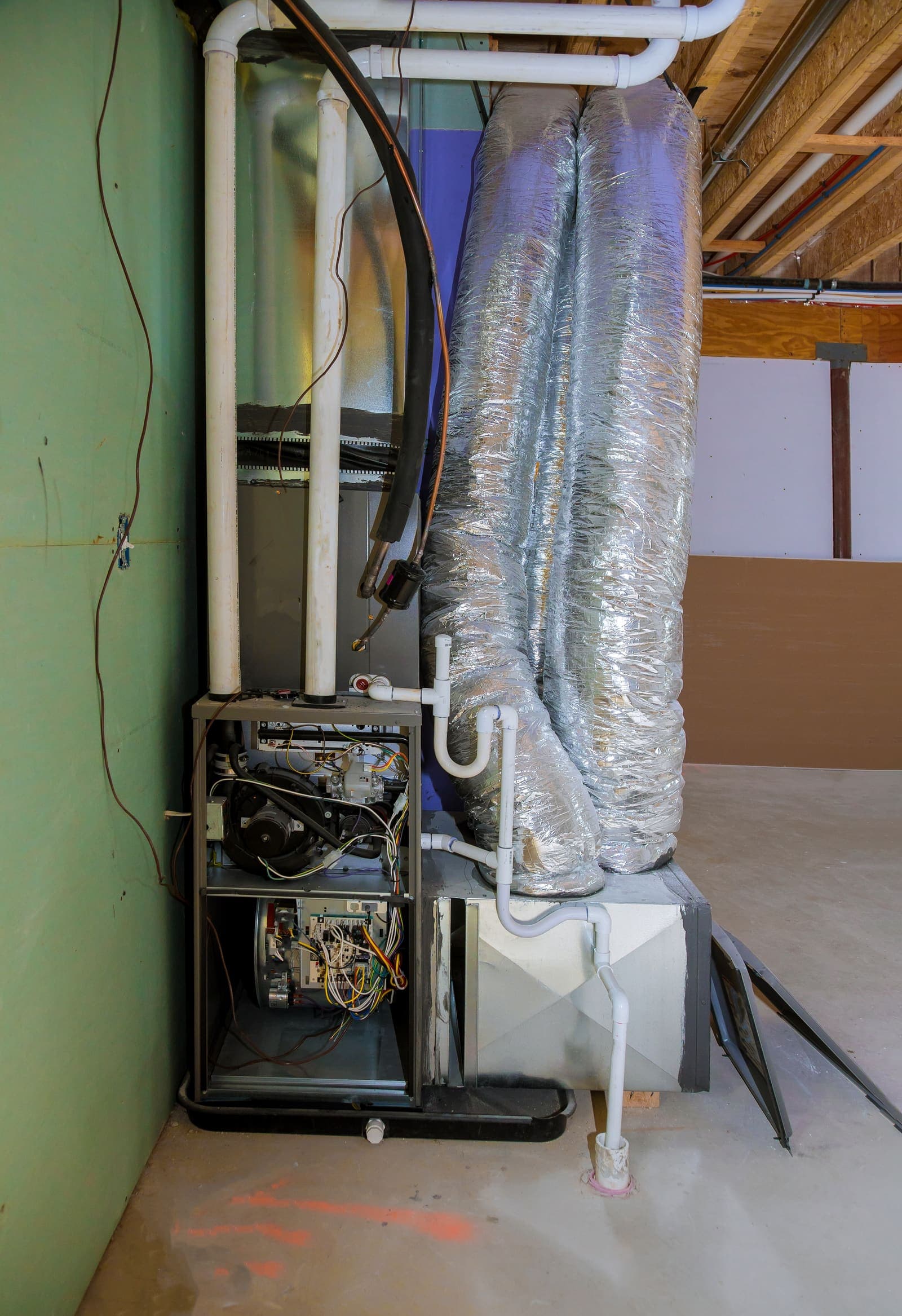
Electric furnaces are the least expensive heating system to buy and install, which makes them tempting — especially in a home without a natural gas line. But the sticker price is only half the story. Here's what electric furnaces cost to install and, more importantly, to run in our climate, and how they compare to the alternative most local homes actually use.
Installation cost. An electric furnace unit typically costs $1,000–$3,000, and installed prices generally land between $2,000 and $6,000 depending on size, whether ductwork and electrical service need upgrading, and whether it's paired with a new AC. That's substantially less than a gas furnace and far less than a heat pump system. There's no gas line, no flue, no combustion — installation is straightforward.
Operating cost is where it turns. An electric furnace makes heat by running electricity through resistance coils — the same principle as a toaster. It converts electricity to heat at essentially 100% efficiency, which sounds good until you compare it to a heat pump, which moves heat instead of making it and delivers roughly 2 to 4 units of heat for every unit of electricity in typical Carolina winter temperatures. In practice, heating a home with an electric furnace can cost two to three times what a heat pump costs in electricity over a winter. Over 15 years, that difference dwarfs the installation savings.
Where electric furnaces do make sense: as a backup or supplemental heat source (this is exactly what the electric heat strips in a heat pump air handler are — a small electric furnace that kicks in on the coldest days), in a small, well-insulated space with minimal heating demand, in a rental or flip where up-front cost is the whole decision, or in a region much colder than ours where heat pump performance drops. In the greater Charlotte area, with winters that are mostly mild, that last case rarely applies.
The better fit for most local homes. If you don't have gas, a heat pump with electric backup heat gives you efficient heating most of the winter, resistance heat only when it's genuinely cold, and air conditioning in the same unit. If you do have gas, a gas furnace — or a dual-fuel setup pairing a furnace with a heat pump — usually beats an electric furnace on operating cost. We wrote separate guides on heat pump cost and dual-fuel systems if you want to dig deeper.
What to expect from us. When a homeowner asks about an electric furnace, we'll price it — but we'll also show you the heat pump comparison over the equipment's life, because that's the number that actually matters. Reinhardt Heating and Air installs electric furnaces, heat pumps, gas furnaces, and dual-fuel systems across Lincoln, Gaston, Mecklenburg, and Catawba counties, with free estimates and no pressure.