

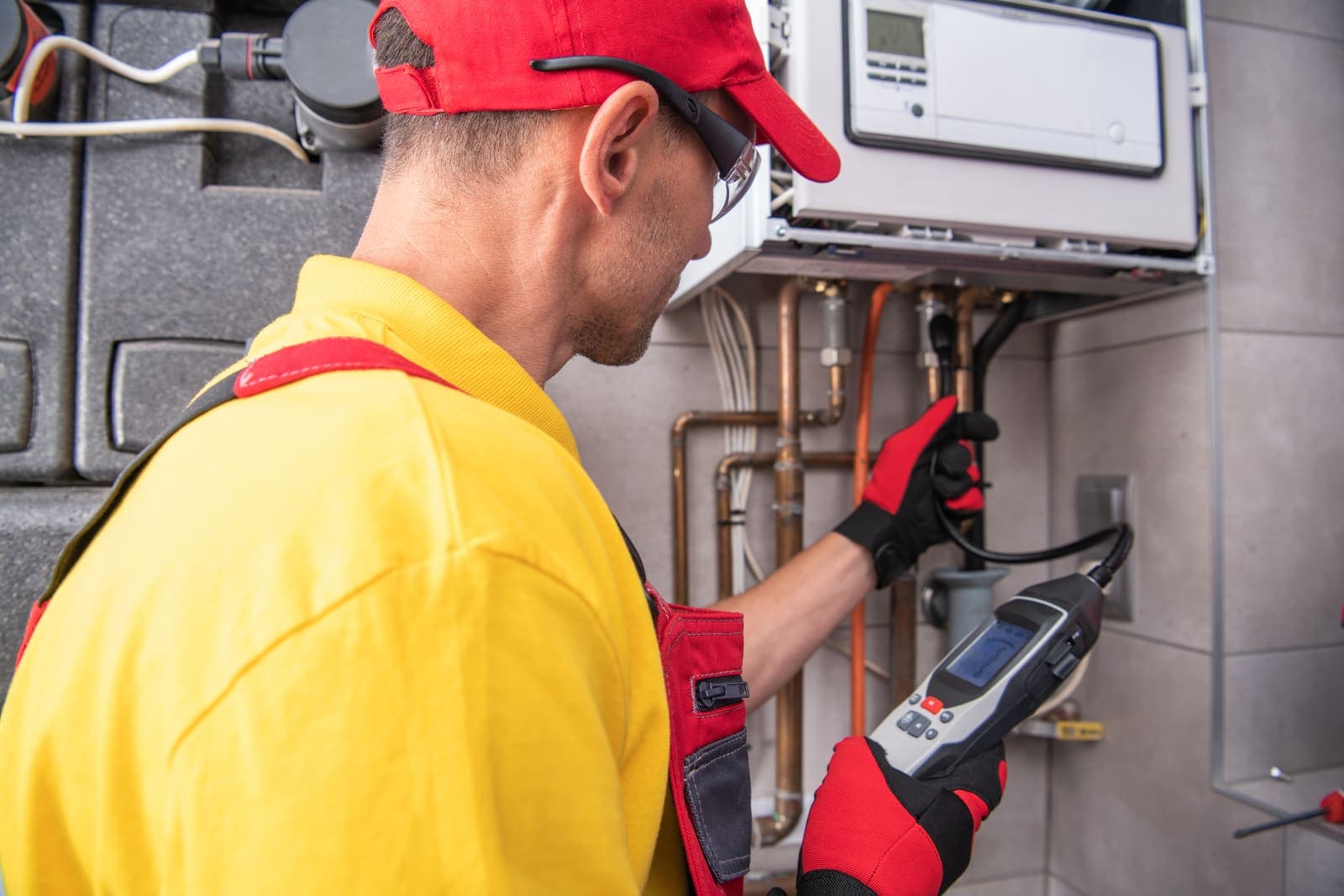
Every fall, the first cold morning in the Charlotte region produces the same service call over and over: the furnace fires up, the burners light, and a few seconds later everything shuts down. Then it tries again. And again. Nine times out of ten, the culprit is a part the size of a pencil that costs less than dinner out — the flame sensor.
What it does. The flame sensor is a thin metal rod, usually with a white porcelain base, that sits in the path of the burner flame. Its only job is safety: it proves to the control board that a flame is actually present. It does this by passing a tiny electrical current through the flame itself. If the board opens the gas valve and doesn't see that signal within a few seconds, it closes the valve — because gas flowing with no flame is exactly the situation nobody wants in their house.
Why it fails. It usually doesn't fail — it gets dirty. Over a season of burning, a thin layer of carbon and oxidation builds up on the rod and insulates it, weakening the signal until the board can't read it anymore. The furnace is working perfectly; it just can't prove it. After sitting idle through a humid Carolina summer, a marginal sensor is often the first thing to give out in October.
The classic symptoms: the burners ignite and then shut off within about 3 to 10 seconds, the furnace retries several times and then locks out (often with a blinking error code on the control board), the blower may run with no heat, and the problem is intermittent at first and gets steadily worse. If the burners never light at all, look at the igniter instead — that's a different part with a different symptom.
Cleaning versus replacing. A flame sensor can often be restored by removing it (usually one screw) and gently cleaning the rod with fine steel wool or a plain abrasive pad — never sandpaper, which leaves grit and scratches that make it foul faster. Turn off power to the furnace first, and don't touch the rod with bare fingers afterward. If the porcelain is cracked or the rod is badly pitted, replace it; the part is typically $10–$40. Professionally cleaned or replaced, expect roughly $80–$250 including the service call.
Why it's worth having a technician look anyway. A sensor that fouls quickly can point to something else — burners that need cleaning, a poor ground, low gas pressure, or a flame that isn't reaching the rod properly. Those are the things an annual tune-up checks, and they're why a flame sensor cleaning is a standard part of ours.
Reinhardt Heating and Air services gas furnaces across Lincoln, Gaston, Mecklenburg, and Catawba counties, 7am to midnight, seven days a week. If your furnace keeps lighting and quitting, call us — this is usually a fast, inexpensive fix.