Most furnaces installed in the last 25 to 30 years don't have a pilot light. Instead, they light the burners with an electronic ignitor — and because that part works hard and runs hot, it's one of the most commonly replaced components in a gas furnace. Here's what it does, how to tell when it's failing, and what a fair replacement price looks like.
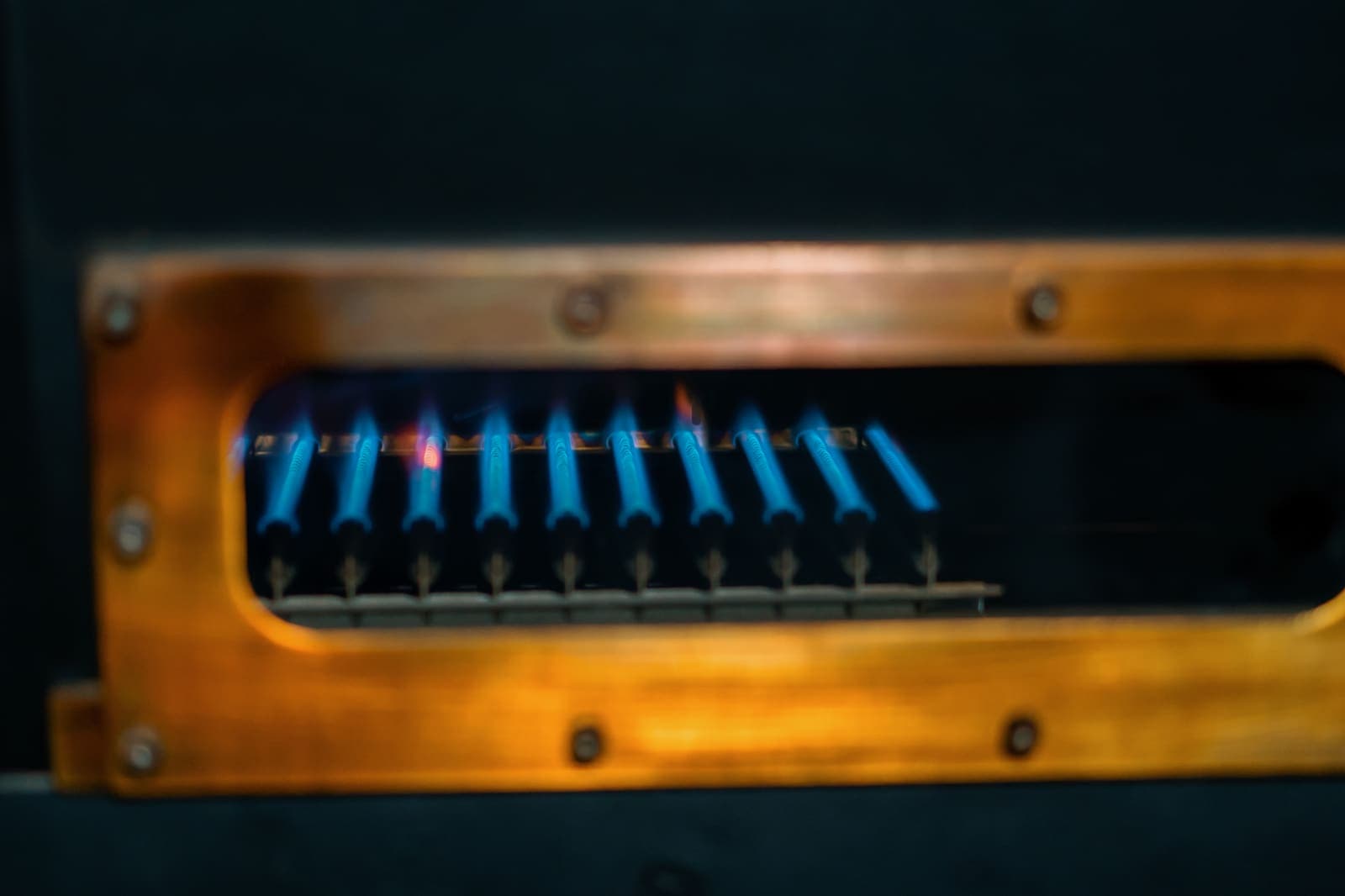
How it works. The most common type is the hot surface ignitor: a small element made of silicon carbide or silicon nitride that glows bright orange — well over 2,000 degrees — when the furnace calls for heat. Once it's hot enough, the gas valve opens and the burners light off it. Some furnaces use a spark ignitor or an intermittent pilot instead, but the glow-type ignitor is by far the most common in homes around here.
Signs it's failing: the furnace starts its sequence (you hear the inducer fan) but the burners never light, you don't see the orange glow through the sight glass, the furnace tries three times and locks out, you hear the gas valve click with no ignition, or the heat works some cycles and not others. A visible crack or a white, burnt spot on the element confirms it. Ignitors often fail at the start of heating season after sitting unused all summer.
Why they fail. Age is the main cause — they're a wear item, typically lasting 4 to 7 years for older silicon carbide types and longer for newer silicon nitride ones. Short cycling wears them out faster because every start is a heat cycle. They're also fragile: the oils from a fingertip can create a hot spot that cracks the element, which is why technicians never touch the element itself.
What replacement costs. The part is usually $20–$100 depending on the furnace. Installed by a professional, expect roughly $150–$350. It's a quick repair — often under an hour — and a well-stocked truck carries universal ignitors that fit most brands.
Can you do it yourself? It's one of the more approachable furnace repairs if you're handy: power off, gas off, unplug the old ignitor, remove one or two screws, and install an exact-match replacement without touching the element. The cautions are real, though. You're working next to the gas train, the wrong ignitor can fail quickly or damage the board, and an ignitor that died young may be a symptom — of short cycling, a dirty filter overheating the furnace, or a voltage problem — that a swap won't cure.
Reinhardt Heating and Air replaces ignitors on all major furnace brands across Lincoln, Gaston, Mecklenburg, and Catawba counties, usually in a single visit. No heat this morning? We answer the phone from 7am to midnight, seven days a week.