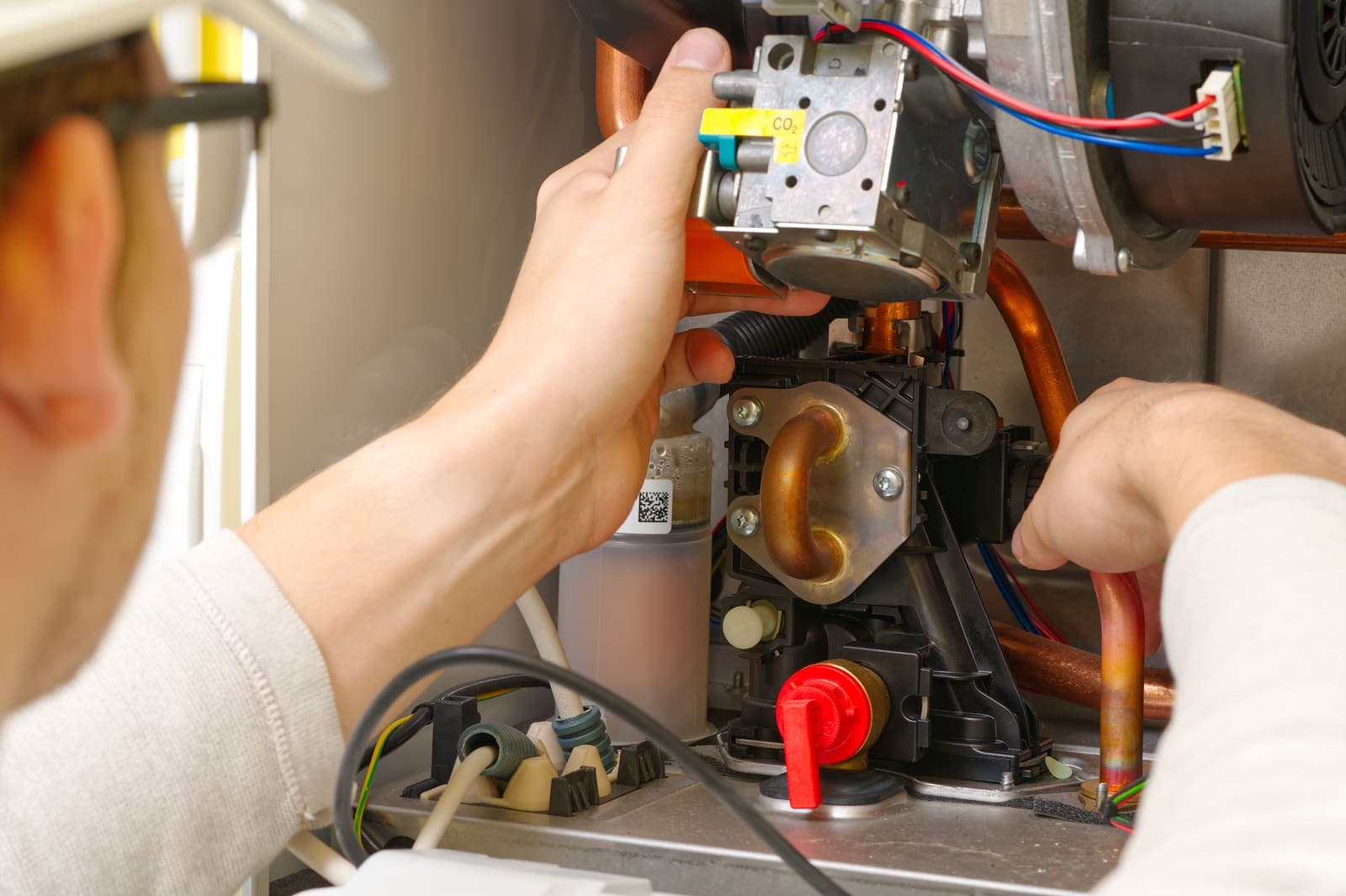
Listen to your furnace the next time the thermostat calls for heat. A few seconds before the burners light, you'll hear a small motor spin up — a soft whir that sounds a bit like a vacuum cleaner behind a wall. That's the draft inducer motor, and it's one of the hardest-working parts in the system. Here's what it does, how it fails, and what it costs when it does.
What it does. The inducer is a small fan motor that starts before every heating cycle. It pulls combustion air through the burners and heat exchanger and pushes the exhaust gases out the flue. It also creates the suction that closes the pressure switch, which is the control board's proof that venting is safe. Without a working inducer, the furnace won't even try to light — by design.
Symptoms it's failing: the furnace won't start at all and you hear nothing when the thermostat calls for heat; a loud humming, buzzing, or rattling at the start of each cycle; a high-pitched whine or a grinding, scraping sound from worn bearings; the motor runs but the furnace shows a pressure switch error because it isn't pulling enough air; the furnace starts only after several attempts; or the motor housing is hot to the touch and smells like burning. A motor that runs continuously, even when the furnace is idle, usually points to a control board or relay problem rather than the motor itself.
Why they fail. Bearing wear from thousands of start cycles is the most common cause. On high-efficiency furnaces, condensate can leak into the motor housing if the drain system clogs, corroding the motor from the inside. Debris pulled in through the vent, a cracked housing, or a failed capacitor on some models round out the list. Typical lifespan is 10 to 15 years, so an inducer failure on a furnace of that age is normal wear, not a defect.
What replacement costs. The inducer assembly — motor, housing, and fan wheel together — typically runs $150–$500 for the part depending on the furnace brand and model, with professional replacement usually landing between $400 and $900 all in. Variable-speed inducers on premium furnaces cost more. If the furnace is under its parts warranty (commonly 10 years when registered), you'll pay labor only.
Repair or replace the furnace? On a furnace under 12 years old, replacing the inducer is a straightforward call. On an older furnace, especially one that's needed other repairs, it's worth pricing a replacement furnace at the same time — a $700 repair on a 17-year-old unit is often money better put toward new equipment with a fresh warranty and better efficiency.
One tip: if your furnace is a condensing (90%+) model, keep the condensate drain clear. It's the single most preventable cause of inducer failure, and it's a standard check on every one of our fall tune-ups.
Reinhardt Heating and Air replaces inducer motors on all major furnace brands across Lincoln, Gaston, Mecklenburg, and Catawba counties, with up-front pricing and warranty checks before you pay for a part.