

"Check the pilot light" is standard advice when a gas furnace won't fire. It's also advice that doesn't apply to most furnaces installed in the last thirty years — because they don't have a pilot light. Knowing which kind you have saves you a lot of frustration on a cold morning.
Does your furnace even have one? A standing pilot is a small flame that burns continuously, waiting to ignite the burners. Furnaces built roughly before the mid-1990s commonly used them. Newer furnaces use electronic ignition instead — either a hot surface igniter (a small ceramic element that glows orange) or an intermittent pilot that sparks a pilot flame only when heat is called for. Both are more efficient, since nothing burns gas around the clock. Look through the sight glass or access panel: if you see a small flame burning with the system idle, you have a standing pilot. If you see nothing until the furnace starts, you have electronic ignition, and "relighting the pilot" isn't a thing you can do.
If you do have a standing pilot and it's out, relighting is usually straightforward. Follow the instructions printed on the label inside the furnace door — they're specific to your model and take precedence over anything you read here. The general sequence: turn the gas control knob to OFF and wait at least five minutes for any accumulated gas to clear (do not skip this), turn the knob to PILOT, hold it down while lighting the pilot with a long lighter, keep holding for about 30 seconds after it lights, then release and turn the knob to ON.
Stop and call a professional if: you smell gas at any point (leave the house first, then call your gas utility from outside), the pilot lights but goes out as soon as you release the knob, it won't light at all, or it lights and then keeps going out over the following hours or days.
Why a pilot won't stay lit. The most common cause is a failing thermocouple — a small sensor that sits in the pilot flame and generates a tiny voltage telling the gas valve it's safe to stay open. When it weakens, the valve closes as soon as you let go of the knob. It's an inexpensive part and a common repair. Other causes include a dirty or partially blocked pilot orifice, a draft reaching the pilot, or a failing gas valve.
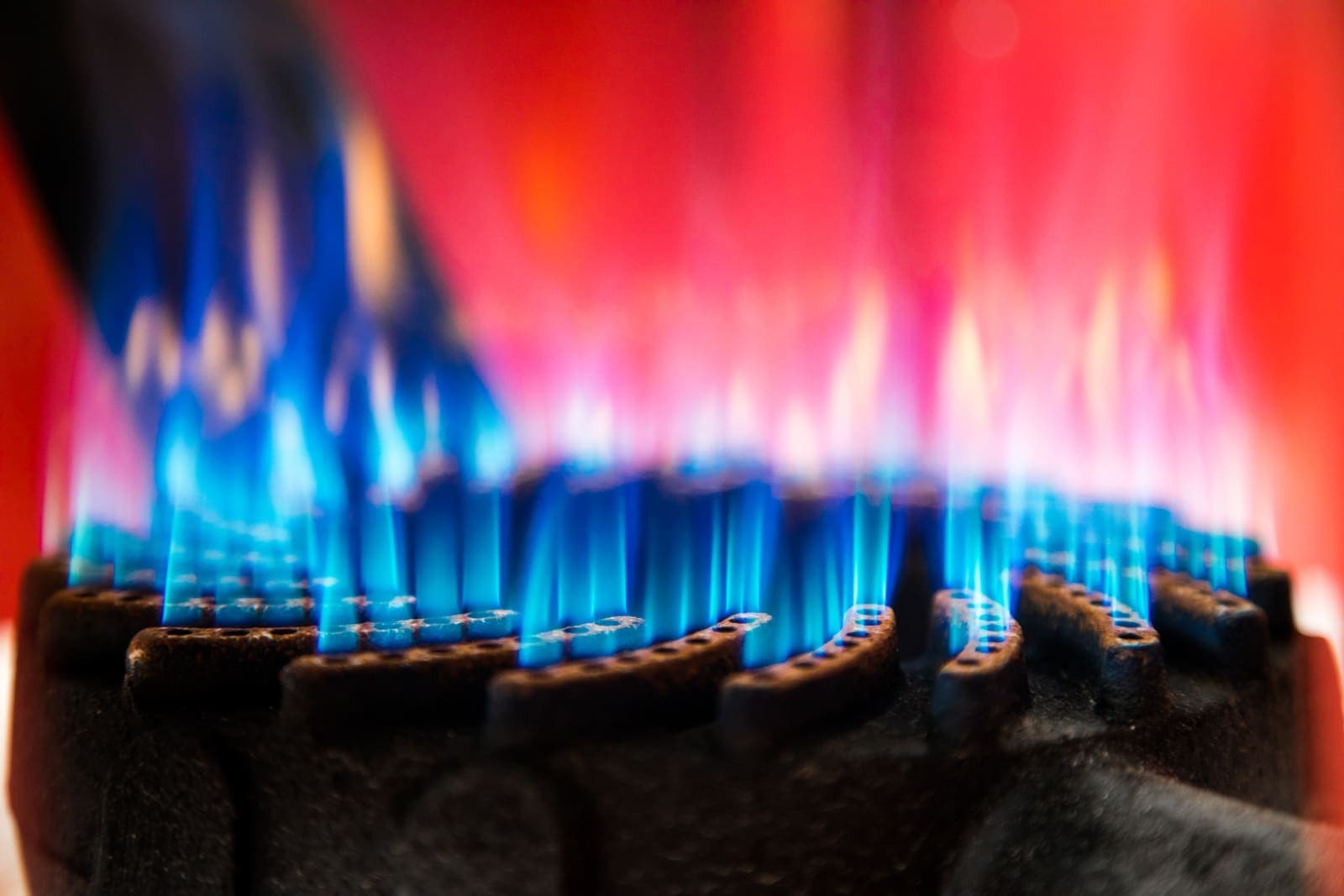
Flame color is worth a look while you're there. A healthy gas flame burns mostly blue. A flame that's largely yellow or orange, or that flickers and rolls out, can indicate incomplete combustion — which is worth taking seriously, because incomplete combustion is associated with carbon monoxide production. If you see that, shut the system down and have it inspected. And whatever type of furnace you have, make sure you have working carbon monoxide alarms; that is non-negotiable with any combustion appliance.
One more thing worth knowing: if your furnace has electronic ignition and won't fire, the usual suspects are a cracked hot surface igniter, a dirty flame sensor (a very common and quick fix), a failed control board, or a tripped safety like a blocked flue or a stuck pressure switch. Those all need a technician with a meter — but they're routine repairs, not disasters.
Heat out and not sure where to start? Reinhardt Heating and Air services gas furnaces of every vintage across Lincoln, Gaston, Mecklenburg, and Catawba counties, 7am to midnight, seven days a week — including carbon monoxide and combustion safety checks.