

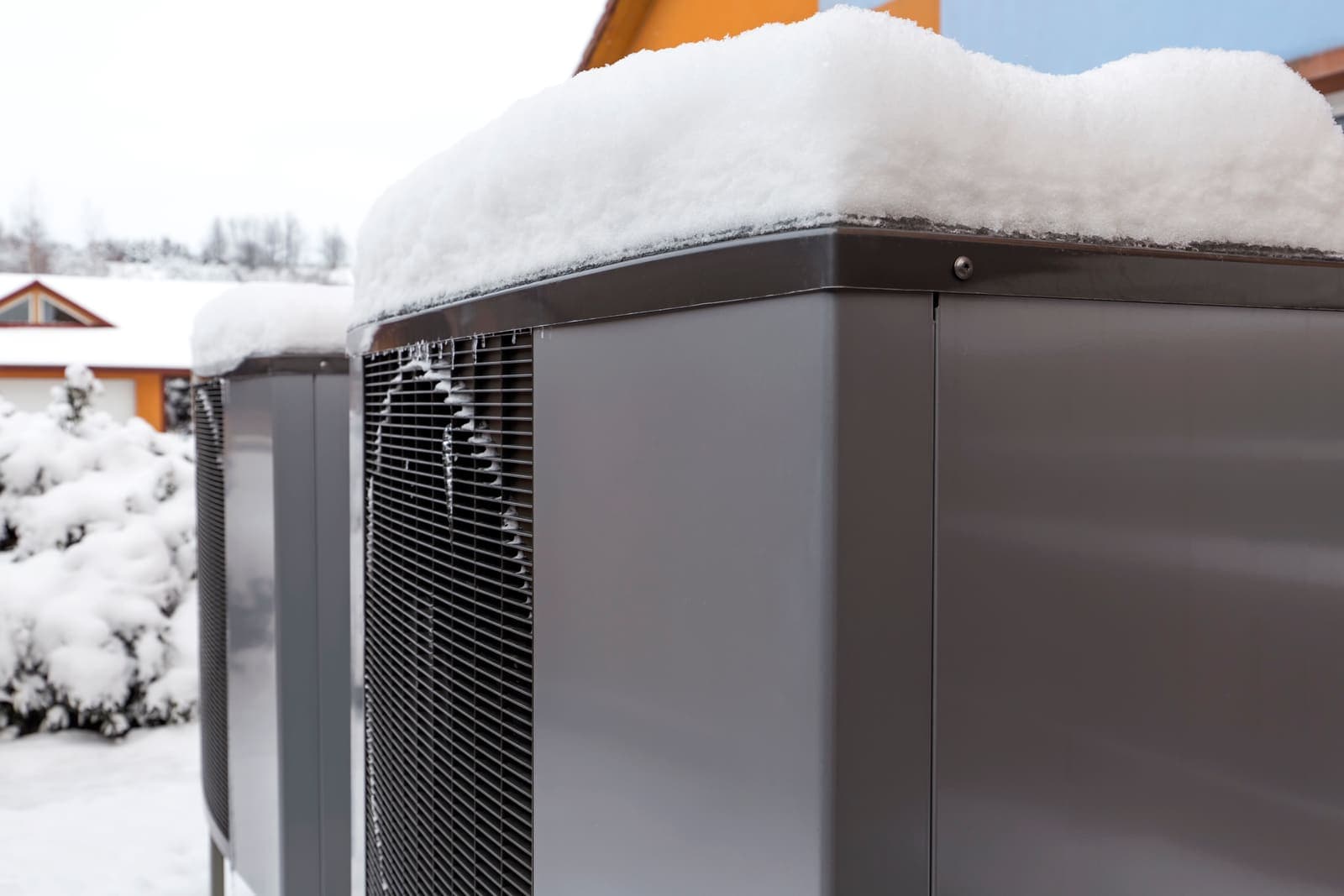
Every winter we get calls that start the same way: "My heat pump is smoking, and now it's blowing cold air." Almost every time, nothing is wrong. The homeowner has just watched a defrost cycle for the first time. It's one of the most misunderstood things a heat pump does, so here's what's happening — and how to tell normal defrost from an actual problem.
Why frost forms. In heating mode, the outdoor coil gets colder than the outside air so it can absorb heat from it. On a cold, damp Carolina morning — think 25 to 40 degrees with the humidity we usually have — moisture in the air freezes onto that coil. A thin layer of frost is normal. Left alone, it would thicken into ice, block airflow, and stop the heat pump from working.
What the defrost cycle does. The system monitors the outdoor coil temperature and run time. When it detects frost building, it temporarily reverses into air conditioning mode, sending hot refrigerant to the outdoor coil to melt the frost. The outdoor fan stops so the heat stays on the coil. Because the indoor coil is now cooling, the system turns on your electric heat strips at the same time to keep the air from the vents from feeling cold. The cycle usually lasts 2 to 10 minutes, then the system switches back to heating.
What you'll see and hear. A cloud of steam rising off the outdoor unit as the frost melts — this is water vapor, not smoke. A whooshing sound as the reversing valve shifts, sometimes with a click or a brief louder noise. Water dripping from the base of the unit. Indoors, the air from the vents may feel cooler or neutral for a few minutes, especially if the heat strips are slow to catch up. The thermostat may show an auxiliary heat indicator. Then everything returns to normal.
When it's not normal. A thick coat of ice over the whole unit, or ice that stays for hours, means defrost isn't working. The unit defrosting every few minutes, or continuously, points to a faulty defrost control board or sensor. Steam with no return to heating, cold air from the vents for 20 minutes or more, or a unit that's iced up solid on top and down the sides all warrant a call. Common causes: a failed defrost sensor or board, a stuck reversing valve, low refrigerant (which makes the coil run too cold), a failed outdoor fan motor, or a unit sitting too low with poor drainage so meltwater refreezes underneath it.
What you can do. Keep the outdoor unit clear of leaves, snow, and anything within two feet. Make sure it sits level on its pad and water can drain away. Never chip ice off the coil — the fins bend and the refrigerant tubing is easily punctured; if you need to melt ice, a garden hose on a mild day is the safest option. And don't switch to emergency heat just because you see steam; EM HEAT runs the expensive strips alone and should be reserved for a true heat pump failure.
Reinhardt Heating and Air services heat pumps across Lincoln, Gaston, Mecklenburg, and Catawba counties. A defrost check — sensor, board, and reversing valve — is part of every fall tune-up, so the first cold snap doesn't bring a surprise.