

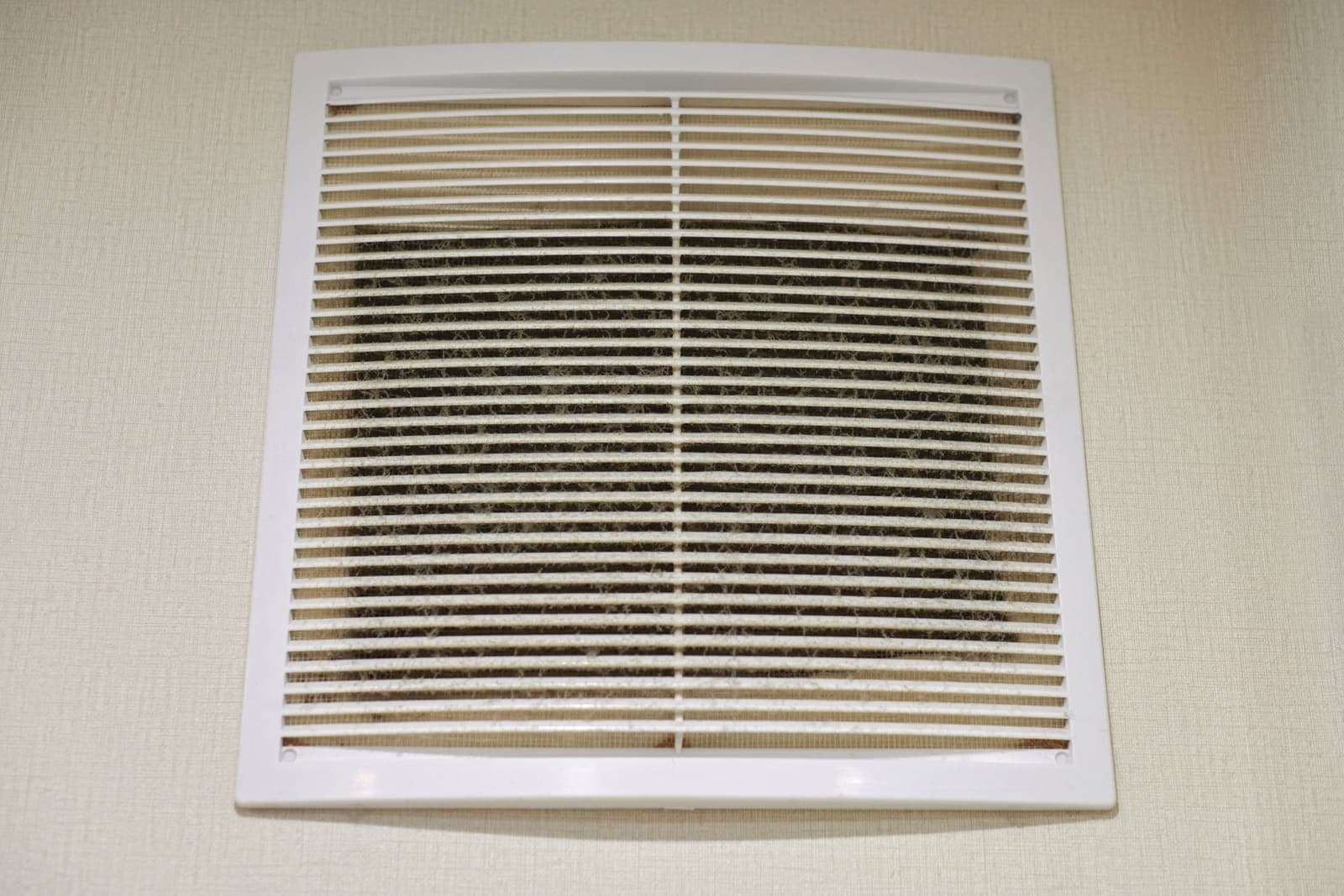
Walk through your house and you'll find two kinds of vents. The small ones in each room blow conditioned air in — those are supply vents. The larger grilles, often one per floor or one in a central hallway, pull air back out. Those are the return vents, and they're the half of the system most homeowners ignore. A surprising share of comfort complaints, high bills, and even equipment failures trace back to the return side.
What a return does. Your blower can only push out as much air as it can pull in. Return vents and the ductwork behind them carry air from your living space back to the air handler, through the filter, across the coil or heat exchanger, and out again. Restrict the return and you restrict the entire system: less air moves, the equipment runs hotter in winter and colder in summer, and the pressure in the house goes out of balance.
The mistakes we see most. Furniture, rugs, or curtains covering a return grille. A clogged filter sitting behind the return (many homes have the filter in the return grille itself). Undersized returns — a very common issue in older Carolina homes and in additions, where supplies were added but the return wasn't enlarged. Too few returns, so bedrooms with closed doors become pressurized and starve the system. Return ducts in the attic or crawlspace that have come apart or were never sealed, pulling in hot, dusty, humid air instead of room air. And occasionally, a return that was never connected at all behind the grille.
What the symptoms look like. Rooms that feel stuffy with the door closed. Doors that slam or won't stay open when the system runs. Whistling at the return grille — a sign it's too small for the airflow. High dust levels (leaky return ducts in the attic are a classic cause). A furnace that trips its high limit, an evaporator coil that freezes, or a blower that fails early. Uneven temperatures between floors. Higher-than-expected bills.
Simple fixes first. Keep every return grille clear by at least a foot. Change the filter on schedule, and if the filter sits in the return grille, use the correct size with the airflow arrow pointing into the duct. Leave interior doors open when the system runs, or add a door undercut or a transfer grille so bedrooms can breathe. Vacuum the grille louvers a few times a year.
When it needs a professional. If the system has always struggled, if a room added later never gets comfortable, or if you hear whistling at the return, the duct design probably needs attention. Adding a return, enlarging an undersized one, or sealing leaky return ducts are each modest jobs compared with equipment replacement — and they're often the fix a new system would have needed too. We measure static pressure to know for sure, rather than guessing.
Reinhardt Heating and Air evaluates airflow and ductwork across Lincoln, Gaston, Mecklenburg, and Catawba counties. If your system never seems to keep up, the answer may be on the return side — and it's usually cheaper than you'd expect.