

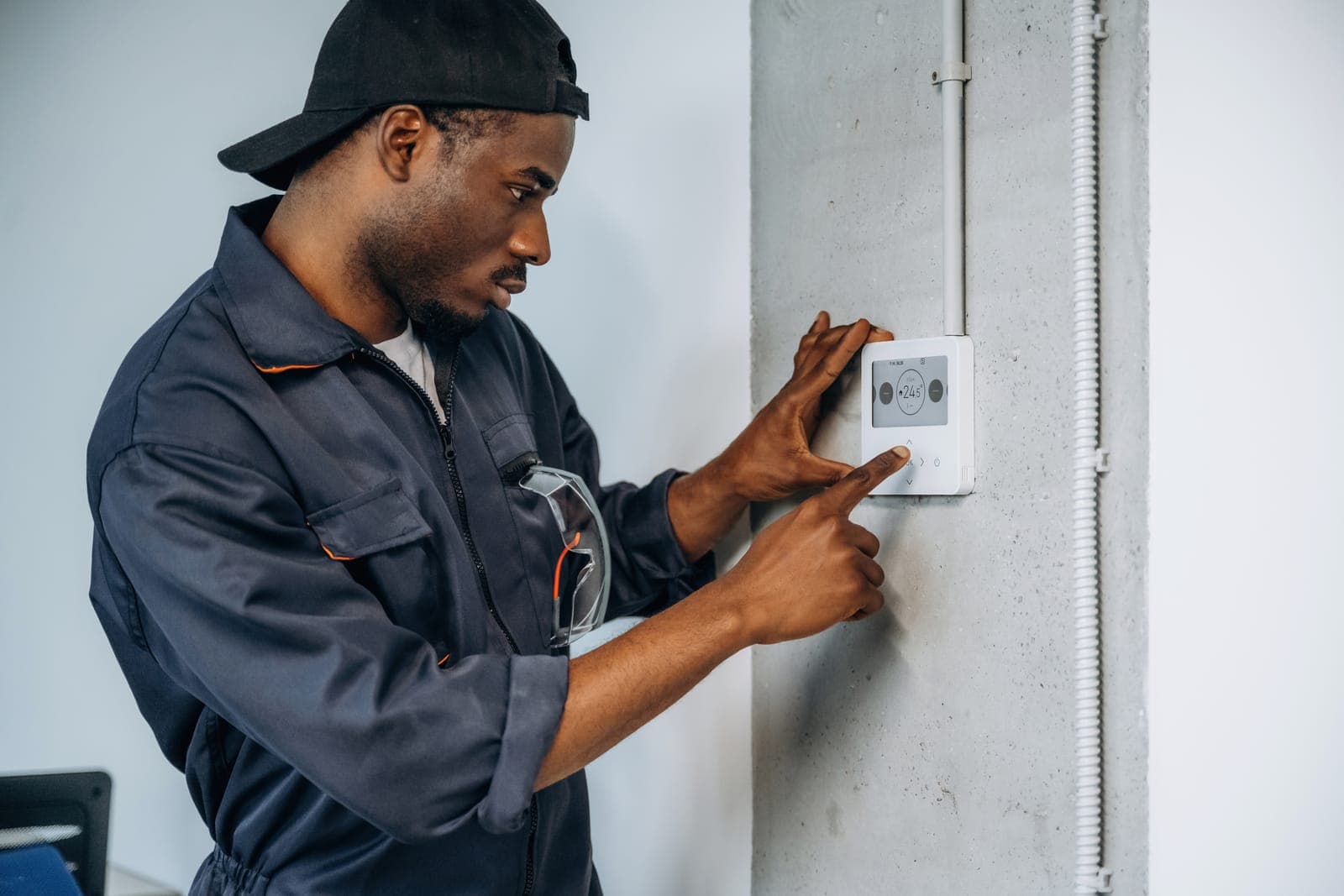
A smart thermostat is one of the few upgrades that genuinely pays for itself — manufacturers and utilities commonly cite savings in the range of 10–15% on heating and cooling. But installation trips up more homeowners than any other DIY HVAC project, usually for one specific reason. Here's what to know first.
The C-wire problem. Smart thermostats need continuous power, delivered by a "common" or C-wire. Many older Carolina homes — especially anything built before the 2000s — have thermostat wiring with only four wires and no C-wire. Without it, your smart thermostat may install fine and then randomly reboot, lose Wi-Fi, or drain the system. Solutions exist (an add-a-wire adapter, a transformer, or running new thermostat wire), but you need to know which one your setup requires before you buy.
Heat pump compatibility matters here. Because so many homes in our region run heat pumps, make sure the thermostat you choose properly supports heat pumps with auxiliary and emergency heat — including the O/B reversing valve wiring. A thermostat that can't manage aux heat correctly will happily run expensive electric strips when it shouldn't, erasing your savings.
What installation involves: turn off power at the breaker, photograph the existing wiring (do this — it saves enormous headaches), remove the old thermostat, label wires by terminal, mount the new base, connect wires to matching terminals, restore power, and configure the system type in the setup wizard. The wiring itself is low voltage, but a wrong connection can damage your control board — a repair that costs far more than the thermostat.
Where a pro is worth it: no C-wire, heat pump or dual-fuel systems, zoning systems, multiple thermostats, high-voltage baseboard systems (which most smart thermostats don't support at all), or any wiring that doesn't match the standard color conventions.
Reinhardt Heating and Air installs and configures smart thermostats across Lincoln, Gaston, Mecklenburg, and Catawba counties — including sorting out C-wire issues and making sure your heat pump's aux heat behaves. Get the savings without the guesswork.