

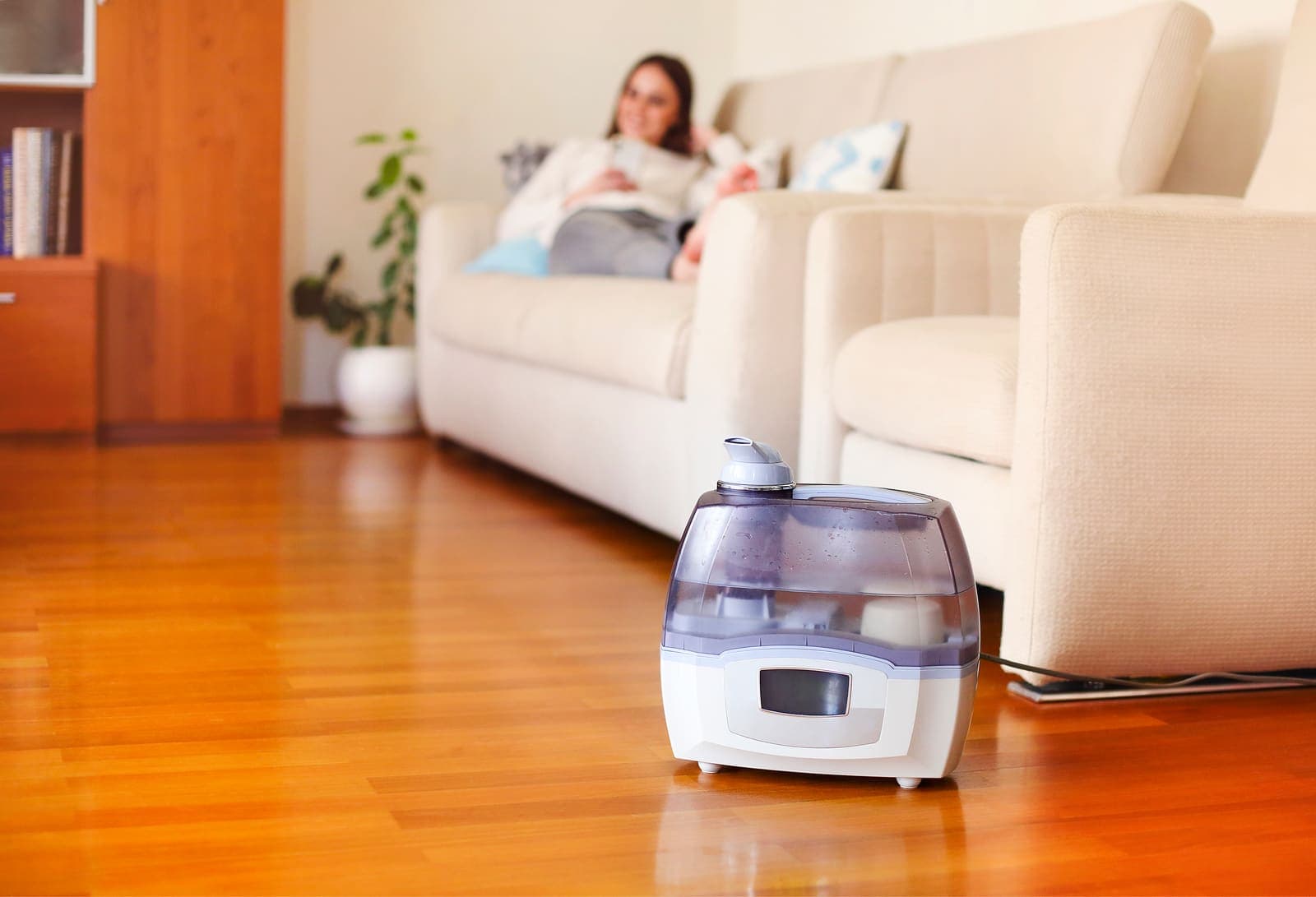
It sounds backwards in a region famous for humidity, but Carolina homes get genuinely dry in winter. Cold outdoor air holds very little moisture, and once your furnace or heat pump warms it up, indoor relative humidity can drop into the teens and twenties — drier than a lot of deserts. That's where the static shocks, cracked lips, bloody noses, and separating hardwood floors come from.
How a whole-house humidifier works: unlike a portable unit that treats one room, a whole-house humidifier installs directly on your ductwork and humidifies every room your system serves. It connects to a water line, and a humidistat controls it automatically. There are three common types. Bypass humidifiers are the least expensive and use your blower's airflow to carry moisture, but only work while the system is running. Fan-powered units have their own fan, add moisture faster, and don't need a bypass duct. Steam humidifiers boil water to produce steam, deliver the most capacity, work independently of whether the system is heating, and cost the most.
What it costs: nationally, a bypass humidifier installed typically runs roughly $400–$800, fan-powered units around $600–$1,200, and steam systems commonly $1,200–$2,500+ depending on capacity and how your ductwork is configured. Operating costs are modest — mostly water plus a little electricity — and annual maintenance means replacing the evaporator pad or cleaning the steam canister.
The real benefits: comfort at a lower thermostat setting (properly humidified air feels warmer, so many people are comfortable a degree or two cooler), relief from dry skin, irritated sinuses, and dry throats, fewer static shocks, and protection for wood — hardwood floors, trim, cabinets, furniture, and instruments all shrink and crack when indoor air stays too dry. That last one matters more than people expect; gapping hardwood floors in February is a common and expensive symptom.
The honest downsides: too much humidity is a real problem, and this is where our climate demands care. Set too high, you'll get condensation on windows, moisture in wall cavities, and — over time — mold. The target is roughly 30–45% relative humidity in winter, adjusted downward as it gets colder outside. A quality humidistat handles this, but it needs to be set correctly and checked. Humidifiers also need annual maintenance; a neglected one with a scaled pad or stagnant water is a genuine air-quality liability rather than a benefit.
One regional note that matters: in the Charlotte region you almost certainly want the humidifier off entirely from spring through fall. Our summers run humid enough that the problem reverses completely — then you're looking at a whole-home dehumidifier instead. A properly installed system makes that seasonal switch easy, and it's worth confirming your installer sets it up that way.
Is it worth it? If you're dealing with dry-air symptoms every winter, have hardwood floors or wood instruments to protect, or someone in the house has sinus or respiratory issues, yes — it's one of the better comfort-per-dollar upgrades available. If your home already holds humidity well in winter, it's optional.
Reinhardt Heating and Air installs and services whole-house humidifiers, dehumidifiers, and full indoor air quality systems across Lincoln, Gaston, Mecklenburg, and Catawba counties. We'll measure what your home is actually doing before recommending anything.